Visit BACORRs website for further information on the organization.
Search This Blog
Monday, January 24, 2011
BACORRs "Celebrate Choice - Pro Choice Parade"
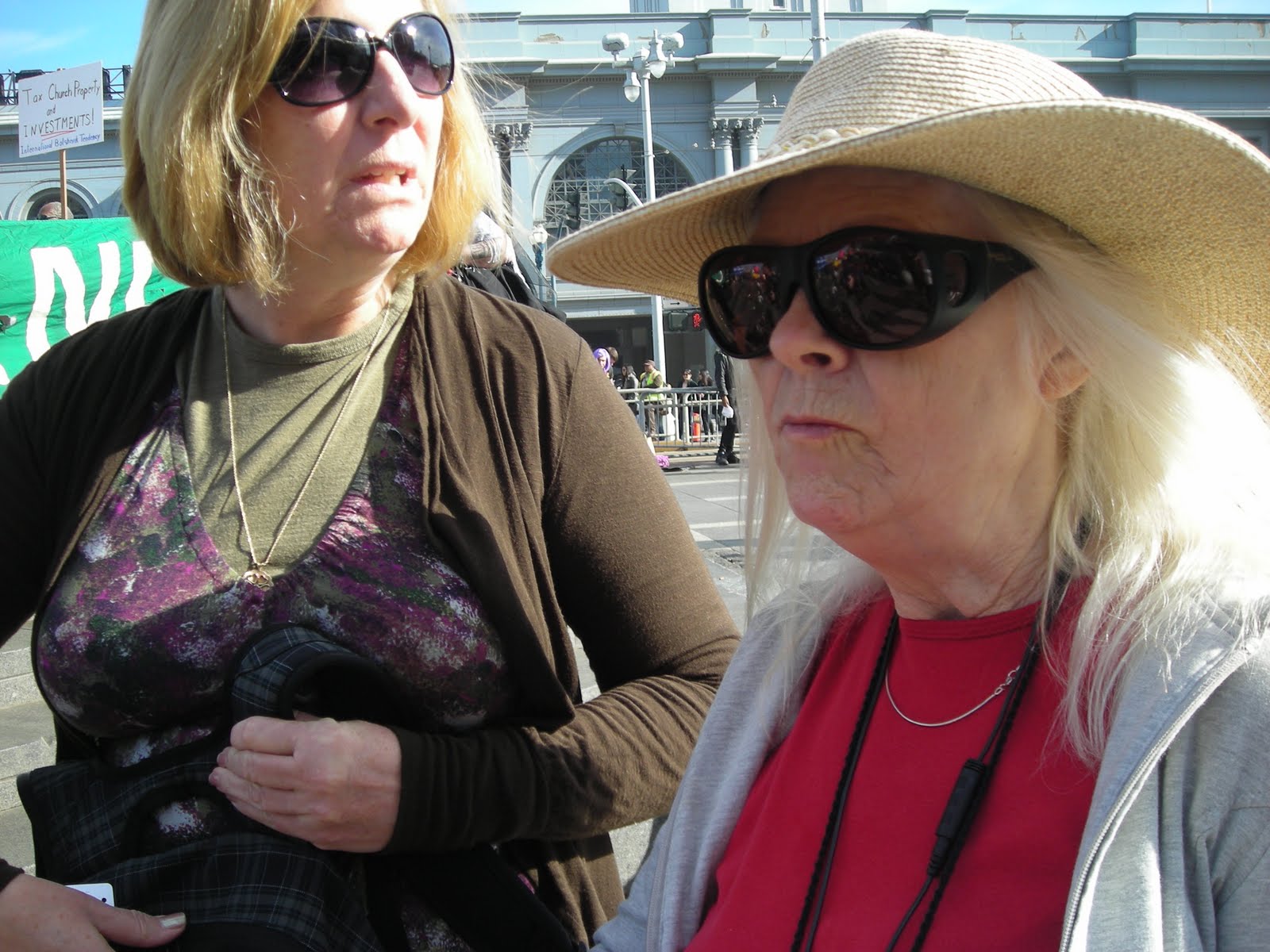
The following are photographs taken on January 22, 2011 at BACORRs "Celebrate Choice - Pro Choice Parade" in San Francisco, CA.
Visit BACORRs website for further information on the organization.
Thursday, January 20, 2011
January 22 & 23, 2011
Join Carol Downer in the following events:
January 22, 2011 - San Francisco, CA

January 23, 2011 - Los Angeles, CA
Revolution Books/Libros Revolucion Presents: "Abortion, Sexuality, & Women's Liberation" at 2PM. Visit their Facebook page for more information: http://www.facebook.com/event.php?eid=146320422088833&index=1
Thursday, December 30, 2010
Assertiveness in the dr.'s office
Published 1975, in THE FEMINIST WOMEN'S HEALTH CENTER REPORT (Vol. 1 No.2)
by Francie Hornstein
The following information is meant for women going to clinics or doctor's office in areas where feminist health services are not available. These suggestions may help you assert your rights as a consumer of health services. They also provide us with defenses against the sort of professionalism which prevents us from having access to informaiton about our own bodies as well as control over our lives. These defenses are in now way permanent solutions, but measures to be used until women regain full control of the field of women's medicine.
1. All people have a legal right to read their own medical charts and records. You may also ask for a copy of your records.
2. You have a right to full and complete explanation of all examinations, treatments and medications. This includes informing you of possible risks, side effects, effectiveness and experimental nature of any medical care you receive.
3. It is often a good idea to call a clinic or doctor before your actual visit to ask some key questions: cost of various procedures, office routines, billing and insurance collection policies, if Medi-Cal or Medi-Caid are accepted, etc.
4. If you are addressed by your first name by office personnel (includding the doctor) you should feel free to relate to them on a first name basis also.
5. Married women have full rights to any and all medical treatment without the consent of their spouse. In most states this includes abortion, V.D. treatment, and sterilization procedures., If you are unsure about the laws in your state, consult a lawyer or a legal aid office.
6. In California, single women who are legal minors (under 18 years of age) are eligible for Medi-Cal for payment for the cost of an abortion. In most situations, this can be done without the consent or knowledge of parents.
7. A woman does not have to be a certain age or have a certain number of children in order to have an elective sterilization procedure. If you are denied the procedure on these grounds, it may be the policy of the doctor or hospital. Consult a lwayer or feminist group to pressure the facility or doctor to change. Also, check the laws of your state.
8. You have a right to read any literature accompanying any medication you are given. This literature, formerly included for th edoctor, often gives more complete information about the drug or device, the possible side effects and contra-indications (reasons some people should not take the drug). You may want to ask to see this literature or the Physician's Desk Reference, a book which includees this information.
9. You have a right to have all of your questions answered to the best of the ability fo the physicians or health workers.
10. If you were referred to the doctor or clinic by a women's center, women's group or a friend, you should mention that fact. A doctor may be more "on guard" to be on good behavior if he/she knows that more business may be gained or lost through your report back to the original referral source.
11. Take a friend with you if you wish. It always helps to have the support of a friend to serve as a patient advocate.
12. When you meet the doctor for the first time, shake hands and greet him/her. Any indication that you intend to be an ACTIVE participant in the visit will help in breaking the tradition of the patient as a passive object.
13. Try to learn as much basic information about your own body as you can. The more familiar you are with the anatomy and functioning of your body, the more able to assert yourself you will be.
* The document is also available for download (pdf) on our Self-Help Clinic page.
by Francie Hornstein
The following information is meant for women going to clinics or doctor's office in areas where feminist health services are not available. These suggestions may help you assert your rights as a consumer of health services. They also provide us with defenses against the sort of professionalism which prevents us from having access to informaiton about our own bodies as well as control over our lives. These defenses are in now way permanent solutions, but measures to be used until women regain full control of the field of women's medicine.
1. All people have a legal right to read their own medical charts and records. You may also ask for a copy of your records.
2. You have a right to full and complete explanation of all examinations, treatments and medications. This includes informing you of possible risks, side effects, effectiveness and experimental nature of any medical care you receive.
3. It is often a good idea to call a clinic or doctor before your actual visit to ask some key questions: cost of various procedures, office routines, billing and insurance collection policies, if Medi-Cal or Medi-Caid are accepted, etc.
4. If you are addressed by your first name by office personnel (includding the doctor) you should feel free to relate to them on a first name basis also.
5. Married women have full rights to any and all medical treatment without the consent of their spouse. In most states this includes abortion, V.D. treatment, and sterilization procedures., If you are unsure about the laws in your state, consult a lawyer or a legal aid office.
6. In California, single women who are legal minors (under 18 years of age) are eligible for Medi-Cal for payment for the cost of an abortion. In most situations, this can be done without the consent or knowledge of parents.
7. A woman does not have to be a certain age or have a certain number of children in order to have an elective sterilization procedure. If you are denied the procedure on these grounds, it may be the policy of the doctor or hospital. Consult a lwayer or feminist group to pressure the facility or doctor to change. Also, check the laws of your state.
8. You have a right to read any literature accompanying any medication you are given. This literature, formerly included for th edoctor, often gives more complete information about the drug or device, the possible side effects and contra-indications (reasons some people should not take the drug). You may want to ask to see this literature or the Physician's Desk Reference, a book which includees this information.
9. You have a right to have all of your questions answered to the best of the ability fo the physicians or health workers.
10. If you were referred to the doctor or clinic by a women's center, women's group or a friend, you should mention that fact. A doctor may be more "on guard" to be on good behavior if he/she knows that more business may be gained or lost through your report back to the original referral source.
11. Take a friend with you if you wish. It always helps to have the support of a friend to serve as a patient advocate.
12. When you meet the doctor for the first time, shake hands and greet him/her. Any indication that you intend to be an ACTIVE participant in the visit will help in breaking the tradition of the patient as a passive object.
13. Try to learn as much basic information about your own body as you can. The more familiar you are with the anatomy and functioning of your body, the more able to assert yourself you will be.
* The document is also available for download (pdf) on our Self-Help Clinic page.
Wednesday, December 29, 2010
WHERE IS MELINDA GATES GOING WITH BREASTFEEDING?*
*The following is an excerpt by Carol Downer. This is part of developing and constructing a Childbirth and Lactation webpage on Women's Health in Women's Hands. We welcome any and all comments. Thank you.
I want to share the continued research that I'm doing into the Women Deliver Conference to discover what the Bill and Melinda Gates Foundation are planning for mothers and babies throughout the world and decide whether we should welcome this or organize against it.
Here is a YouTube video of a 13-minute excerpt of the 60 Minutes video interview of Melinda Gates in which they attribute high infant mortality to midwives using non-sterile instruments and say that they lay newborns on cold, dirt floors. Now, supposedly these rates have improved since they have taught the midwives to use sterile razor blades to cut the umbilical cord and they've taught them to wrap the newborn in a blanket, and infant mortality has gone down.
Now I want to ask you to look at some websites about Kangaroo Care, a practice of laying the naked newborn directly on the mother's bare chest, to see that this is the more advanced, enlightened way to stabilize a newborn, especially a low-birth-weight one. The mother's body keeps the baby warm, encourages breathing, and when the baby squirms and roots around, it will find the mother's nipple by itself within an hour or so, thus securing the best nutrition and "securing its safety in its mother's arms".
• Kangaroo Care - http://en.wikipedia.org/wiki/Kangaroo_care
• Dr. Bergman - http://www.kangaroomothercare.com/drbergman.htm
What a difference between the Western-style medical approach of teaching "ignorant midwives" to keep the baby warm in a blanket, and the respectful, supportive approach of letting the baby have access to its Mom.
A personal note: I bottle-fed my first two babies, because I was told I had no milk (in fact, they gave me DES to dry up my milk. A nurse who had breast fed showed me techniques to "help" my baby nurse). I then went on to breast feed my other children and always passed along this knowledge to other mothers. I assumed that this was a cultural, woman-to-woman tradition. Imagine my surprise when I saw an 8 minute film a few months ago showing a brand-new newborn wriggle around on its mother's belly, crawling by fits and starts up until it "latched on" to the nipple.
I'm also enclosing the information so that you can order this 8 minute film to see this for yourself. Also, we hope to include a minute or two of this footage on the new page on my website, http://www.womenshealthinwomenshands.org/.
• breastfeeding - baby's choice - http://www.healthychildren.cc/skinlatchsuite.pdf
I want to share the continued research that I'm doing into the Women Deliver Conference to discover what the Bill and Melinda Gates Foundation are planning for mothers and babies throughout the world and decide whether we should welcome this or organize against it.
Here is a YouTube video of a 13-minute excerpt of the 60 Minutes video interview of Melinda Gates in which they attribute high infant mortality to midwives using non-sterile instruments and say that they lay newborns on cold, dirt floors. Now, supposedly these rates have improved since they have taught the midwives to use sterile razor blades to cut the umbilical cord and they've taught them to wrap the newborn in a blanket, and infant mortality has gone down.
Now I want to ask you to look at some websites about Kangaroo Care, a practice of laying the naked newborn directly on the mother's bare chest, to see that this is the more advanced, enlightened way to stabilize a newborn, especially a low-birth-weight one. The mother's body keeps the baby warm, encourages breathing, and when the baby squirms and roots around, it will find the mother's nipple by itself within an hour or so, thus securing the best nutrition and "securing its safety in its mother's arms".
• Kangaroo Care - http://en.wikipedia.org/wiki/Kangaroo_care
• Dr. Bergman - http://www.kangaroomothercare.com/drbergman.htm
What a difference between the Western-style medical approach of teaching "ignorant midwives" to keep the baby warm in a blanket, and the respectful, supportive approach of letting the baby have access to its Mom.
A personal note: I bottle-fed my first two babies, because I was told I had no milk (in fact, they gave me DES to dry up my milk. A nurse who had breast fed showed me techniques to "help" my baby nurse). I then went on to breast feed my other children and always passed along this knowledge to other mothers. I assumed that this was a cultural, woman-to-woman tradition. Imagine my surprise when I saw an 8 minute film a few months ago showing a brand-new newborn wriggle around on its mother's belly, crawling by fits and starts up until it "latched on" to the nipple.
I'm also enclosing the information so that you can order this 8 minute film to see this for yourself. Also, we hope to include a minute or two of this footage on the new page on my website, http://www.womenshealthinwomenshands.org/.
• breastfeeding - baby's choice - http://www.healthychildren.cc/skinlatchsuite.pdf
Thursday, December 16, 2010
Tuesday, December 7, 2010
Dr. Andrew Rutland
Dear Pro-Choice Movement,
Dr. Rutland is an obstetrician-gynecologist who is currently on probation. In July 2009 a patient receiving a paracervical block (local anesthesia) had a severe reaction and ultimately passed 6 days later. The Los Angeles County Coroner's office closed the case after autopsy ruled her death as accidental. Under pressure from anti-abortionists, Dr. Lakshmanan Sathyavagiswaran - Chief Medical Examiner changed the mode of death from accidental to homicide. The reasons are connected to technical violations of practice, which the department disapproves of, but are NOT connected to this event.
This case is about the CA Medical Board's attempt to close down an abortion provider very much like Dr. Bruce Steir in 1997. Originally charged with 2nd degree murder, in April 2000 Dr. Steir bargained for involuntary manslaughter.
We currently do not have an up-to-date on Dr. Rutland's case. But we do urge that people be extremely critical of this case and any other case where anti-abortionists are behind the attack.
Please read the following articles:
http://www.ocregister.com/articles/rutland-227209-board-documents.html
http://articles.latimes.com/2010/jan/08/local/la-me-doctor8-2010jan08
And, if you'd like further information please contact Dr. Rutland at drandrewrutland@yahoo.com
Thank you.
Dr. Rutland is an obstetrician-gynecologist who is currently on probation. In July 2009 a patient receiving a paracervical block (local anesthesia) had a severe reaction and ultimately passed 6 days later. The Los Angeles County Coroner's office closed the case after autopsy ruled her death as accidental. Under pressure from anti-abortionists, Dr. Lakshmanan Sathyavagiswaran - Chief Medical Examiner changed the mode of death from accidental to homicide. The reasons are connected to technical violations of practice, which the department disapproves of, but are NOT connected to this event.
This case is about the CA Medical Board's attempt to close down an abortion provider very much like Dr. Bruce Steir in 1997. Originally charged with 2nd degree murder, in April 2000 Dr. Steir bargained for involuntary manslaughter.
We currently do not have an up-to-date on Dr. Rutland's case. But we do urge that people be extremely critical of this case and any other case where anti-abortionists are behind the attack.
Please read the following articles:
http://www.ocregister.com/articles/rutland-227209-board-documents.html
http://articles.latimes.com/2010/jan/08/local/la-me-doctor8-2010jan08
And, if you'd like further information please contact Dr. Rutland at drandrewrutland@yahoo.com
Thank you.
Thursday, November 18, 2010
SELF-HELP CLINIC Part II
Copyrighted 1971
Much has happened since we first wrote our Self-Help Clinic article last summer E.W. July, 1971. At that time, under Carol Downer's direction, we had been meeting for about four months evolving a concept that would have far reaching effects. Since early spring, first working within women's liberation cell groups, then expanding to community women's church groups, Y.W.C.A. groups, and then taking the concept across the country, we are pleased to announce that over 2,000 women (including a group in London, England begun by a Connecticut Self-Help sister), have been introduced to self-examination and the Self-Help Clinic concept. Little did we realize that first night when we all agreed to confront our physical hang-ups in a physical way, that we were all to share real sisterhood in a very meaningful way. Our grandmothers and great-grandmothers knew well the meaning of sisterhood. Mothers, daughters and aunts would meet together to share their womanly experience and be ready to help one another through their physical crises. Since grandmother's time, we have lost the closeness of sisters' experiences and helpful hands. This, along with being denied access to modern knowledge, has left us without knowledgeable good preventative health care. The Self-Help concept of self-examination is based on this reintroduction of sisterly sharing of experiences and knowledge in a commonsense, honest manner. Collective knowledge used within close sisterly groups that we call The Self-Help Clinic, have already had positive results as valuable preventative health care measures.

The Self-Help Clinic consists of 3 meetings; usually an evening a week for three weeks. These meetings deal primarily with learning self-examination with the help of all the sisters in the group. This is a very meaningful sharing experience for all, since we learn what is normal by having the opportunity to examine many women, under well-conditions. Occasionally we will have a sister who has a more serious problem and having caught it within self-examination, is encouraged to seek professional help. The Self-Help Clinic provides the opportunities for women to confront the many myths, misconceptions, and misinformation that we have been fed our entire lives. Being able to examine ourselves in a group situation gives us the first real concrete opportunity to compare the "text book" with reality. This is also the time when we learn to recognize cervical cap changes (in color, tone and other signs) in one another. Each woman during the first session has learned to insert her own speculum for the self-examination procedure and keep this speculum for continuous use. We also learn to give bi-manual (two hands) pelvic examinations by the 3rd evening. Looking at diagrams of our pelvic organs and being able to touch them and know their structure manually, gives us a far greater understanding of our bodies. We also spend the sessions reading and discussing a variety of written material, much of it brought in by the members of the group. We use the Birth Control Handbook as a major source for discussion and reference.

One major learning skill we have readily available is being able to recognize what is "normal". Since the meeting are primarily for women who want to learn about their own bodies, we have the perfect opportunity to see many, many normally healthy women. Contrary to clinics' and physicians' experiences (they have been trained and continue to work with patients suffering with some kinds of symptoms of illness), we are in the most fortunate position to learn to recognize what is a well-woman. By being able to recognize what is well and normal, we are better skilled to recognize that which is abnormal. It is interesting to note that Dr. Donald Ostergard of Harbor General Hospital in Torrance, Calif. * has been medical director for a similar program providing "book" and clinical training for women with similar non-medical backgrounds. His findings show that non-medical personnel with a high percentage of accuracy, can recognize deviations from normal. For example; Vulvar lesions, 89%, breast lesions, 85%, vaginal well muscle breakdown, 90% plus, uterine and surrounding structural abnormalities, 90%, antiflexed (elbowed backward) uterus, 90% plus. These are very high percentages of accuracy. Dr. Ostergard explains that his family planning patients are generally well patients who have come into the clinic for birth control information. His training program for the women paramedics stress normal breast and pelvic examinations. When a deviation from normal is found, the patient is referred to the physician. It is not important that the trainee recognize the exact nature of the abnormality. Dr. Ostergard's findings agree with our Self-Help Clinics' similar opportunities for well-women examinations: Women with varying non-medical backgrounds with sufficient training opportunities for examining well-women, can effectively recognize abnormal conditions.

How much better off we are, being able to recognize the unusual and to confidently make arrangements to get professional help; compared to remaining in ignorance until our problems have progressed to the point of seriousness and possible permanent damage. The Self-Help Clinic concept also helps us learn to take better overall care of our bodies. We stress breast examination and strongly encourage yearly Pap smears for cancer detection. We have found that, just like a sore throat, when we recognize an early infection or inflammation, some kind of personal care which includes lots of rest for our body, often connects the problem.
The Advanced Self-Help Clinics

One of the most exciting outgrowths of the Self-Help Clinics is in the development of advanced groups who have dedicated themselves to implementation and research. These groups feel that it is time that we women do the deciding on what we want in research areas on better health care for women. A large number of these women are guiding new Self-Help Clinics, sharing their experience with newer sisters to the concept, as well as perfecting their paramedic training skills. Quality libraries with up-to-date material and references on research into women's health needs, is another area of implementation. Another advanced Self-Help Clinic has published our "Ho To Start Your Own Self-Help Clinic" booklet which is available to anyone or groups interested in starting a Self-Help Clinic. There is presently a sizeable number of advanced, very dedicated and brave women who are determined to research out the possibilities of menstrual extraction. Let us here, clear up any misconceptions involving the experimentations being done within these advanced groups. And that is, menstrual extraction is not a euphemism for abortion. When the Self-Help Clinic means abortion we refer to it as abortion. This is a most important point. Our advanced groups must not be misrepresented if they are going to continue to work effectively for all women. These dedicated women, working and learning together are providing valuable information in the skills of menstrual extraction. Most of them seem to quite comfortable extract on the first day of their flow. We are told that a policy of these groups is that at no time is a sister allowed to experience discomfort. We are also told that it is almost unnecessary to mention the need for caution and gentleness, although both are major considerations in every case. Caution and gentleness seem to be almost instinctive.
While working within one of the advanced Self-Help Clinics, Lorraine Rothman found that the device that the group was attempting to use at that time needed vast improvement. It consisted of a simple syringe specially constructed to hold vacuum by the pull-back plunger; some plastic tubing; and a specially constructed small bored flexible cannula. (Neither the tubing used in manufacturing the cannula nor the finished cannula are available through laboratory or surgical suppliers. It is specially made by a large bio-instrument manufacturer and sold for a very high price.) Lorraine decided that since the syringe fell apart so easily causing air and fluid to back up into the uterus, she would devise another that would, 1) Provide a portable and continuous vacuum without back up worry, 2) Provide a syringe that need not be specially constructed, and 3) Provide a by-pass collection bottle which is a must since menstrual flows vary from woman to woman. She also realized the need to have ready access to the specially manufactured high quality, semi-flexible cannulas. They cannot be purchased at local lab houses, standard lab catalogs, nor can they be improvised out of the hardware store or drug store supplies. Lorraine's invention, tagged "Del'-Em", presently has a patent pending in hopes of keeping it within the women's movement as well as to encourage other women to put their heads and hearts to work for the movement. The semi-rigid cannula, which is a critical component of Del'-Em, when chemically sterilized, can be inserted through the undilated cervix. The cannula will bend to conform to the uterine walls without breaking or losing its flexibility and yet is not hard enough to damage the uterine lining. In addition, the cannula bore is large enough to facilitate removal of the menses. The research in these advanced groups is conducted under the guidance of medically trained personnel within clinical settings. They learn hospital and clinically acceptable sterile techniques under careful guidance. They also have access to the specially built cannulas and use only them. The women examine each other carefully to determine whether the procedure of menstrual extraction is safe for each. In this way they learn that a select group of women are eligible for the procedure. The following conditions, which are screened very carefully, are ineligible: Retroflexed (elbowed backwards) or antiflexed (elbowed foreward) uteruses, serious infections, polyps, extensive scarring, endometriosis and double uteruses. The Advanced Self-Help Clinics have also found that there is no way for a woman, by herself, to know her exact uterine conditions. Sisterhood is Safety: Safety is Sisterhood. In addition, continued research with Del'-Em indicates that group experience, knowledge, cooperation and sisterly concern improves the kit's efficiency. It would be irresponsible, here, to give step by step written directions in menstrual extraction. Just as in learning to sail a boat, it can't be done just by reading a book. It takes a seasoned sailor along to instruct with a properly outfitted vessel. The Advanced Self-Help Clinic groups, some of whom have been experimenting with Del'-Em for almost a year, know by personal experience that if this movement is to succeed, it will-only through SISTERHOOD. Groups of sisters learning from sisters and helping other sisters to fully realize their control over their own bodies is a very meaningful and workable concept. The idea of a "kit in each woman's private bathroom" is anti-sisterhood and anti-women's liberation. By being a select item for one woman only, within the confines of her own four walls, and without the collective help and support of her sisters, everyone and especially the movement looses. The concept of Self-Help stresses Sisterhood that makes possible the benefits from collective knowledge, collective experiences, collective training and especially the sisterly concern for one another. When it is necessary to travel for more extensive experiences or information, we do. Lastly, the Self-Help concept emphasizes competent medical backup and the use of safe equipment at all times.

We are seeing, today, unbelievable gains springing from this movement of sisterhood. We also forsee that it will take continued dedication by all sisters, vast investments of time, motivation, enthusiasm, and $$ for this movement to succeed. Throwing off the oppression of centuries takes total commitment and sisterhood.
Much has happened since we first wrote our Self-Help Clinic article last summer E.W. July, 1971. At that time, under Carol Downer's direction, we had been meeting for about four months evolving a concept that would have far reaching effects. Since early spring, first working within women's liberation cell groups, then expanding to community women's church groups, Y.W.C.A. groups, and then taking the concept across the country, we are pleased to announce that over 2,000 women (including a group in London, England begun by a Connecticut Self-Help sister), have been introduced to self-examination and the Self-Help Clinic concept. Little did we realize that first night when we all agreed to confront our physical hang-ups in a physical way, that we were all to share real sisterhood in a very meaningful way. Our grandmothers and great-grandmothers knew well the meaning of sisterhood. Mothers, daughters and aunts would meet together to share their womanly experience and be ready to help one another through their physical crises. Since grandmother's time, we have lost the closeness of sisters' experiences and helpful hands. This, along with being denied access to modern knowledge, has left us without knowledgeable good preventative health care. The Self-Help concept of self-examination is based on this reintroduction of sisterly sharing of experiences and knowledge in a commonsense, honest manner. Collective knowledge used within close sisterly groups that we call The Self-Help Clinic, have already had positive results as valuable preventative health care measures.

The Self-Help Clinic consists of 3 meetings; usually an evening a week for three weeks. These meetings deal primarily with learning self-examination with the help of all the sisters in the group. This is a very meaningful sharing experience for all, since we learn what is normal by having the opportunity to examine many women, under well-conditions. Occasionally we will have a sister who has a more serious problem and having caught it within self-examination, is encouraged to seek professional help. The Self-Help Clinic provides the opportunities for women to confront the many myths, misconceptions, and misinformation that we have been fed our entire lives. Being able to examine ourselves in a group situation gives us the first real concrete opportunity to compare the "text book" with reality. This is also the time when we learn to recognize cervical cap changes (in color, tone and other signs) in one another. Each woman during the first session has learned to insert her own speculum for the self-examination procedure and keep this speculum for continuous use. We also learn to give bi-manual (two hands) pelvic examinations by the 3rd evening. Looking at diagrams of our pelvic organs and being able to touch them and know their structure manually, gives us a far greater understanding of our bodies. We also spend the sessions reading and discussing a variety of written material, much of it brought in by the members of the group. We use the Birth Control Handbook as a major source for discussion and reference.

One major learning skill we have readily available is being able to recognize what is "normal". Since the meeting are primarily for women who want to learn about their own bodies, we have the perfect opportunity to see many, many normally healthy women. Contrary to clinics' and physicians' experiences (they have been trained and continue to work with patients suffering with some kinds of symptoms of illness), we are in the most fortunate position to learn to recognize what is a well-woman. By being able to recognize what is well and normal, we are better skilled to recognize that which is abnormal. It is interesting to note that Dr. Donald Ostergard of Harbor General Hospital in Torrance, Calif. * has been medical director for a similar program providing "book" and clinical training for women with similar non-medical backgrounds. His findings show that non-medical personnel with a high percentage of accuracy, can recognize deviations from normal. For example; Vulvar lesions, 89%, breast lesions, 85%, vaginal well muscle breakdown, 90% plus, uterine and surrounding structural abnormalities, 90%, antiflexed (elbowed backward) uterus, 90% plus. These are very high percentages of accuracy. Dr. Ostergard explains that his family planning patients are generally well patients who have come into the clinic for birth control information. His training program for the women paramedics stress normal breast and pelvic examinations. When a deviation from normal is found, the patient is referred to the physician. It is not important that the trainee recognize the exact nature of the abnormality. Dr. Ostergard's findings agree with our Self-Help Clinics' similar opportunities for well-women examinations: Women with varying non-medical backgrounds with sufficient training opportunities for examining well-women, can effectively recognize abnormal conditions.

How much better off we are, being able to recognize the unusual and to confidently make arrangements to get professional help; compared to remaining in ignorance until our problems have progressed to the point of seriousness and possible permanent damage. The Self-Help Clinic concept also helps us learn to take better overall care of our bodies. We stress breast examination and strongly encourage yearly Pap smears for cancer detection. We have found that, just like a sore throat, when we recognize an early infection or inflammation, some kind of personal care which includes lots of rest for our body, often connects the problem.
The Advanced Self-Help Clinics
One of the most exciting outgrowths of the Self-Help Clinics is in the development of advanced groups who have dedicated themselves to implementation and research. These groups feel that it is time that we women do the deciding on what we want in research areas on better health care for women. A large number of these women are guiding new Self-Help Clinics, sharing their experience with newer sisters to the concept, as well as perfecting their paramedic training skills. Quality libraries with up-to-date material and references on research into women's health needs, is another area of implementation. Another advanced Self-Help Clinic has published our "Ho To Start Your Own Self-Help Clinic" booklet which is available to anyone or groups interested in starting a Self-Help Clinic. There is presently a sizeable number of advanced, very dedicated and brave women who are determined to research out the possibilities of menstrual extraction. Let us here, clear up any misconceptions involving the experimentations being done within these advanced groups. And that is, menstrual extraction is not a euphemism for abortion. When the Self-Help Clinic means abortion we refer to it as abortion. This is a most important point. Our advanced groups must not be misrepresented if they are going to continue to work effectively for all women. These dedicated women, working and learning together are providing valuable information in the skills of menstrual extraction. Most of them seem to quite comfortable extract on the first day of their flow. We are told that a policy of these groups is that at no time is a sister allowed to experience discomfort. We are also told that it is almost unnecessary to mention the need for caution and gentleness, although both are major considerations in every case. Caution and gentleness seem to be almost instinctive.
While working within one of the advanced Self-Help Clinics, Lorraine Rothman found that the device that the group was attempting to use at that time needed vast improvement. It consisted of a simple syringe specially constructed to hold vacuum by the pull-back plunger; some plastic tubing; and a specially constructed small bored flexible cannula. (Neither the tubing used in manufacturing the cannula nor the finished cannula are available through laboratory or surgical suppliers. It is specially made by a large bio-instrument manufacturer and sold for a very high price.) Lorraine decided that since the syringe fell apart so easily causing air and fluid to back up into the uterus, she would devise another that would, 1) Provide a portable and continuous vacuum without back up worry, 2) Provide a syringe that need not be specially constructed, and 3) Provide a by-pass collection bottle which is a must since menstrual flows vary from woman to woman. She also realized the need to have ready access to the specially manufactured high quality, semi-flexible cannulas. They cannot be purchased at local lab houses, standard lab catalogs, nor can they be improvised out of the hardware store or drug store supplies. Lorraine's invention, tagged "Del'-Em", presently has a patent pending in hopes of keeping it within the women's movement as well as to encourage other women to put their heads and hearts to work for the movement. The semi-rigid cannula, which is a critical component of Del'-Em, when chemically sterilized, can be inserted through the undilated cervix. The cannula will bend to conform to the uterine walls without breaking or losing its flexibility and yet is not hard enough to damage the uterine lining. In addition, the cannula bore is large enough to facilitate removal of the menses. The research in these advanced groups is conducted under the guidance of medically trained personnel within clinical settings. They learn hospital and clinically acceptable sterile techniques under careful guidance. They also have access to the specially built cannulas and use only them. The women examine each other carefully to determine whether the procedure of menstrual extraction is safe for each. In this way they learn that a select group of women are eligible for the procedure. The following conditions, which are screened very carefully, are ineligible: Retroflexed (elbowed backwards) or antiflexed (elbowed foreward) uteruses, serious infections, polyps, extensive scarring, endometriosis and double uteruses. The Advanced Self-Help Clinics have also found that there is no way for a woman, by herself, to know her exact uterine conditions. Sisterhood is Safety: Safety is Sisterhood. In addition, continued research with Del'-Em indicates that group experience, knowledge, cooperation and sisterly concern improves the kit's efficiency. It would be irresponsible, here, to give step by step written directions in menstrual extraction. Just as in learning to sail a boat, it can't be done just by reading a book. It takes a seasoned sailor along to instruct with a properly outfitted vessel. The Advanced Self-Help Clinic groups, some of whom have been experimenting with Del'-Em for almost a year, know by personal experience that if this movement is to succeed, it will-only through SISTERHOOD. Groups of sisters learning from sisters and helping other sisters to fully realize their control over their own bodies is a very meaningful and workable concept. The idea of a "kit in each woman's private bathroom" is anti-sisterhood and anti-women's liberation. By being a select item for one woman only, within the confines of her own four walls, and without the collective help and support of her sisters, everyone and especially the movement looses. The concept of Self-Help stresses Sisterhood that makes possible the benefits from collective knowledge, collective experiences, collective training and especially the sisterly concern for one another. When it is necessary to travel for more extensive experiences or information, we do. Lastly, the Self-Help concept emphasizes competent medical backup and the use of safe equipment at all times.

We are seeing, today, unbelievable gains springing from this movement of sisterhood. We also forsee that it will take continued dedication by all sisters, vast investments of time, motivation, enthusiasm, and $$ for this movement to succeed. Throwing off the oppression of centuries takes total commitment and sisterhood.
The West Coast Sisters
* "Family Planning and Cancer Screening Services as Provided by Paramedical Personnel, A Training Program", by Donald R. Ostergard, M.D., AM. Assoc. Plan. Parent. Phys., Kansas City, Mo., April 5-6, 1971.
Tuesday, November 16, 2010
A NEW DEFINITION OF THE CLITORIS
Published Originally in Women's Health Movement Papers, May 1981
Visit Our Anotomy web page for more detail
In 1976, a self-help group spent several months studying the sexual response and the structure of the female sexual organ. On the basis of these observations and reading of anatomy texts, we now define the clitoris, the female sex organ, as being much, much more than a miniature penis, or various assorted structures collectively referred to as "the vulva" and the vagina.
Superficially, the clitoral shaft and glans resembles a miniature penis, but it does not have the same structure as the penis. It does not, as the penis does, have two types of erectile tissue, several sets of muscles and two bulbs. The new definition of the clitoris does include these homologous structures. The tiny shaft and glans, defined as the clitoris by the male medical profession cannot produce an orgasm in the same way a penis can. The clitoris, as newly defined, work together as an organ to produce the sexual response cycle of excitement, plateau, orgasm and resolution as described by William Masters and Virginia Johnson in their famous sex studies in the fifties and sixties.
Introducing the Clitoris
The clitoris is bounded by the vulva, which includes the pubic mound, the outer lips and the hairy area around the anus. The clitoris, covered with hairless skin which is dotted with sebaceous oil glands, consists of the inner lips, hood, glans and shaft, legs, muscles, urethral sponge, perineal sponge, suspensory ligament and the hymen.

Looking at the clitoris with your legs spread apart you will see the inner lips joining at the top of the frenulum which is attached to the hood. This area, right where the clitoris joins the pubic mound, is called the commissure. Many women placed the flat of their fingers over the commissure to apply pressure to the clitoral shaft to masturbate. The hood partially covers the small rod-shaped shaft topped by the glans, which varies in size but is about the size of a pea. The shaft lies in a groove on the underside of the pubic bones, and it thus protected from injury. During sexual arousal, the suspensory ligament which extends down on the pubic symphysis swells, becomes shortened, and pulls the erect shaft up over the symphysis. The effect of this pulling up of the shaft is often to make the clitoral glans seem to disappear under the hood.
The shaft divides at its base into two legs (crura) which extend down and are attached behind the ischium bones (these are the bones that flare out; the bones we site on. Over these bones lie two sets of muscles which form the sides of an equilateral triangle. Another set of muscles is stretched across to form the muscles contract rhythmically several times, squeezing out the blood of the congested tissues forcefully, causing the intensely pleasurable sensations of orgasm.
You can see the opening of the urethra (the meatus) just above the clitoral opening to the vagina. Behind this urethral opening is the urethral sponge which encases the urethra and runs along with ceiling of the vagina, protecting it from pressure, such as might result from fingers or a thrusting penis.

At the base of the clitoris, you can see the inner lips join, forming a loose curtain of skin, the fourchette, that in some women, stretches across the clitoral opening. In others, the skin is very loose or may even be stretched or torn from childbirth. Just below the clitoral opening to the vagina is the perineal sponge which is approximately one inch thick. The hymen may partially cover the clitoral opening to the vagina or it may be stretched or even torn. During self-examination with a speculum, you can see the toothy projection of the hymen about an inch or two within.
The anal sphincter muscle, the circular muscle which closes the anus, also tenses up during excitement and plateau phases and contracts during orgasm.
*Labels in bold face type are parts of Clitoris. Clitoris illustration researched by: Carol Downer, Suzann Gage, Sherry Schiffer, Francie Hornstein, Lorraine Rothman, Lynn Heidelberg and Kathleen Hodge.
Visit Our Anotomy web page for more detail
In 1976, a self-help group spent several months studying the sexual response and the structure of the female sexual organ. On the basis of these observations and reading of anatomy texts, we now define the clitoris, the female sex organ, as being much, much more than a miniature penis, or various assorted structures collectively referred to as "the vulva" and the vagina.
Superficially, the clitoral shaft and glans resembles a miniature penis, but it does not have the same structure as the penis. It does not, as the penis does, have two types of erectile tissue, several sets of muscles and two bulbs. The new definition of the clitoris does include these homologous structures. The tiny shaft and glans, defined as the clitoris by the male medical profession cannot produce an orgasm in the same way a penis can. The clitoris, as newly defined, work together as an organ to produce the sexual response cycle of excitement, plateau, orgasm and resolution as described by William Masters and Virginia Johnson in their famous sex studies in the fifties and sixties.
Introducing the Clitoris
The clitoris is bounded by the vulva, which includes the pubic mound, the outer lips and the hairy area around the anus. The clitoris, covered with hairless skin which is dotted with sebaceous oil glands, consists of the inner lips, hood, glans and shaft, legs, muscles, urethral sponge, perineal sponge, suspensory ligament and the hymen.

Looking at the clitoris with your legs spread apart you will see the inner lips joining at the top of the frenulum which is attached to the hood. This area, right where the clitoris joins the pubic mound, is called the commissure. Many women placed the flat of their fingers over the commissure to apply pressure to the clitoral shaft to masturbate. The hood partially covers the small rod-shaped shaft topped by the glans, which varies in size but is about the size of a pea. The shaft lies in a groove on the underside of the pubic bones, and it thus protected from injury. During sexual arousal, the suspensory ligament which extends down on the pubic symphysis swells, becomes shortened, and pulls the erect shaft up over the symphysis. The effect of this pulling up of the shaft is often to make the clitoral glans seem to disappear under the hood.
The shaft divides at its base into two legs (crura) which extend down and are attached behind the ischium bones (these are the bones that flare out; the bones we site on. Over these bones lie two sets of muscles which form the sides of an equilateral triangle. Another set of muscles is stretched across to form the muscles contract rhythmically several times, squeezing out the blood of the congested tissues forcefully, causing the intensely pleasurable sensations of orgasm.
You can see the opening of the urethra (the meatus) just above the clitoral opening to the vagina. Behind this urethral opening is the urethral sponge which encases the urethra and runs along with ceiling of the vagina, protecting it from pressure, such as might result from fingers or a thrusting penis.

At the base of the clitoris, you can see the inner lips join, forming a loose curtain of skin, the fourchette, that in some women, stretches across the clitoral opening. In others, the skin is very loose or may even be stretched or torn from childbirth. Just below the clitoral opening to the vagina is the perineal sponge which is approximately one inch thick. The hymen may partially cover the clitoral opening to the vagina or it may be stretched or even torn. During self-examination with a speculum, you can see the toothy projection of the hymen about an inch or two within.
The anal sphincter muscle, the circular muscle which closes the anus, also tenses up during excitement and plateau phases and contracts during orgasm.
*Labels in bold face type are parts of Clitoris. Clitoris illustration researched by: Carol Downer, Suzann Gage, Sherry Schiffer, Francie Hornstein, Lorraine Rothman, Lynn Heidelberg and Kathleen Hodge.
Subscribe to:
Comments (Atom)